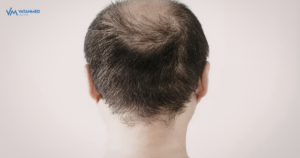
Hair Transplant and Androgenetic Alopecia: Ultimate Patient Guide
Hair transplant and androgenetic alopecia is a particularly important topic for patients who notice a receding hairline, temples, thinning on the crown or gradual loss of density. Androgenetic alopecia, often referred to as male pattern baldness, is one of the most common causes of hair loss in men, but it can also affect women.
For many patients from the United Kingdom, Ireland, Germany, Scandinavia and other European countries, a hair transplant in Poland is a way to improve the appearance of the hairline and thicken areas affected by hair loss. However, it is important to remember that a hair transplant does not automatically stop the progression of androgenetic alopecia. That is why individual consultation, assessment of the cause of hair loss and a realistic treatment plan are essential.
Understanding hair transplant and androgenetic alopecia helps patients make better decisions before choosing a procedure. The transplant can restore selected areas, but the long-term strategy should also consider the possible progression of hair loss in untreated areas.
This article explains what androgenetic alopecia is, the role of DHT and hair loss, when a hair transplant for androgenetic alopecia may be considered and why a long-term strategy is so important. A consultation with a qualified specialist is important, because the best method depends on the individual case and results may vary depending on the patient.
Hair Transplant and Androgenetic Alopecia – Basic Information
Hair transplant and androgenetic alopecia should be understood as a combination of two elements: the cause of hair loss and the method of restoring areas that have already lost density. Androgenetic alopecia is usually a progressive process, and a hair transplant may help restore the hairline or thicken selected areas, but it does not change the genetic tendency toward further hair miniaturisation.
According to NHS hair loss information, some types of hair loss, such as male and female pattern baldness, may be permanent and often run in families. This means that the treatment plan should take into account not only the current appearance of the hair, but also the possible development of hair loss in the future.
When discussing hair transplant and androgenetic alopecia, it is important to understand that the procedure can improve density in transplanted areas, but non-transplanted hair may continue to thin over time.
For this reason, hair transplant and androgenetic alopecia should never be planned as a quick cosmetic decision only. It should be treated as part of a long-term medical and aesthetic strategy.
A hair transplant may be especially considered in patients who have:
- a stable or predictable pattern of hair loss,
- a sufficiently good donor area,
- realistic expectations,
- no significant medical contraindications,
- awareness that non-transplanted hair may continue to thin.
What Is Androgenetic Alopecia?
Androgenetic alopecia is a genetically determined, progressive hair loss condition associated with the sensitivity of hair follicles to androgens. In men, it most often appears as a receding hairline, temples, thinning on the top of the head or the gradual connection of these areas.
Cleveland Clinic male pattern baldness information describes androgenetic alopecia as a type of hair loss in men that causes thinning hair and a receding hairline. In turn, Mayo Clinic hair loss information indicates that androgenic alopecia usually develops gradually and in predictable patterns.
In the context of hair transplant and androgenetic alopecia, identifying the pattern of hair loss is important. The specialist needs to know whether the hair loss is limited to the hairline, crown or mid-scalp, or whether several areas are affected.
In men, typical areas of hair loss include:
- receding temples,
- frontal hairline,
- top of the head, meaning the crown,
- middle part of the scalp,
- a combination of several areas in more advanced hair loss.
In women, androgenetic alopecia more often appears as general thinning on the top of the head, without such a clear recession of the hairline as in men. Each case requires individual assessment.
Because hair transplant and androgenetic alopecia can look different in men and women, the treatment plan should always be adapted to the patient’s pattern of hair loss, donor area and expectations.
DHT and Hair Loss – What Is the Connection?
DHT and hair loss is a key topic in androgenetic alopecia. DHT, or dihydrotestosterone, is a derivative of testosterone. In genetically predisposed people, hair follicles in specific areas of the scalp may be more sensitive to DHT.
This sensitivity may lead to miniaturisation of the hair follicles. The hair gradually becomes thinner, shorter and weaker until it may eventually stop being visible. This process usually develops slowly, which is why many patients notice increasing thinning over several years.
For patients researching hair transplant and androgenetic alopecia, DHT is important because transplanted hair is usually taken from areas that are more resistant to androgen-related miniaturisation.
It is important to remember that DHT does not affect all hair follicles in the same way. Hair from the back and sides of the head is often more resistant to androgenetic miniaturisation. This is why this area most often serves as the donor area during hair transplantation.
In practical terms, hair transplant and androgenetic alopecia are connected because the procedure uses more resistant follicles from the donor area to restore areas where hair has been lost due to androgen sensitivity.
Androgenetic Alopecia Treatment – What Are the Options?
Androgenetic alopecia treatment may include different strategies, depending on the patient’s age, degree of hair loss, speed of hair loss, general health and expectations. Not every patient immediately qualifies for a hair transplant. Sometimes a specialist may recommend observation, supportive treatment or stabilisation of the process before the procedure.
When planning hair transplant and androgenetic alopecia, the doctor should consider whether the hair loss is active, whether the donor area is strong enough and whether the patient needs a long-term medical or supportive plan.
Possible elements of treatment may include:
- diagnosis of the cause of hair loss,
- assessment of hair loss stability,
- pharmacological treatment recommended by a doctor, if appropriate,
- change or adjustment of scalp care,
- hair transplant in suitable candidates,
- a long-term plan to monitor hair loss progression.
Medication for hair loss should not be started or stopped without consulting a doctor. Some preparations may have contraindications or side effects. Individual qualification is especially important in patients who take long-term medication or have coexisting diseases.
Publications available in the PubMed medical research database show that androgenetic alopecia and hair loss treatment methods are widely studied, but the choice of therapy should always be adapted to the individual patient.
A responsible approach to hair transplant and androgenetic alopecia may include both restoration of lost density and monitoring of future hair loss risk.
Hair Transplant for Androgenetic Alopecia – When Does It Make Sense?
Hair transplant for androgenetic alopecia may be considered when the patient has clear thinning or hair loss in specific areas and the donor area allows safe graft extraction. The procedure may help restore the hairline, temples, frontal area or crown.
The topic of hair transplant and androgenetic alopecia is especially relevant when the patient has already lost density in visible areas and wants to improve the appearance of the hairline or crown.
The specialist should assess:
- whether the hair loss is sufficiently stable,
- what the donor area looks like,
- how many grafts can be safely extracted,
- which areas should be prioritised,
- whether the patient may need supportive treatment,
- how to plan the hairline naturally and long term.
In younger patients, planning should be especially careful. A hairline that is too low or overly aggressive use of grafts may make future treatment more difficult if hair loss continues. A responsible plan should take into account possible changes in the following years.
For this reason, hair transplant and androgenetic alopecia should be discussed in terms of both the current result and the possible future progression of hair loss.
Is Hair Transplant a Permanent Solution for Hair Loss?
The phrase permanent solution for hair loss is often used in the context of hair transplantation, but it requires careful explanation. Transplanted hair is usually taken from areas that are more resistant to the influence of DHT. Thanks to this, it may last long term.
However, hair transplant and androgenetic alopecia should not be presented as a guarantee that hair loss will stop completely. A transplant can restore selected areas, but it does not automatically stop androgenetic alopecia in other, non-transplanted hairs.
Natural hair in neighbouring areas may continue to thin if the hair loss process progresses. Therefore, the patient may need further observation, supportive treatment or another procedure in the future, if medically justified.
Educational information for patients about transplantation and hair loss treatment is published by the International Society of Hair Restoration Surgery. The organisation emphasises the importance of patient education and standards in hair restoration surgery.
This is why hair transplant and androgenetic alopecia requires realistic expectations. The procedure may provide long-term improvement in transplanted areas, but it should be planned with awareness of ongoing hair loss risk.
FUE and DHI in Androgenetic Alopecia
In patients with androgenetic alopecia, modern hair transplant techniques such as FUE and DHI are often used. The best method depends on the individual case, so the choice of technique should result from consultation, not only from the patient’s preference.
When comparing techniques for hair transplant and androgenetic alopecia, the specialist should consider the number of grafts, the donor area, hair structure, the treatment area and the expected result.
FUE in Androgenetic Alopecia
FUE hair transplant involves extracting individual follicular units from the donor area and implanting them into thinning areas. This method may be used in patients with receding temples, thinning in the frontal area or crown, if the donor area is suitable.
DHI in Androgenetic Alopecia
DHI hair transplant uses a special tool for graft implantation. It may be considered in selected cases, for example when precise work on the hairline is needed. The final decision depends on the specialist’s assessment, number of grafts, hair structure and planned result.
Both FUE and DHI may be used in the context of hair transplant and androgenetic alopecia, but neither technique should be selected without proper diagnosis and planning.
Male Hair Loss Treatment – Why Is a Long-Term Plan Important?
Male hair loss treatment should take into account the fact that androgenetic alopecia may progress over many years. A patient who currently has only receding temples may notice thinning in the mid-scalp or crown in the future.
This is why hair transplant and androgenetic alopecia should be planned strategically. The goal is not only to improve the current appearance, but also to protect future treatment options.
A long-term plan should answer the following questions:
- which area has the greatest impact on the patient’s appearance,
- whether the donor area allows safe graft extraction,
- whether it is worth saving some grafts for the future,
- whether supportive treatment is needed,
- how to design the hairline so that it looks natural after several years.
Not every patient should aim for maximum density in one procedure. Sometimes a better solution is strategic graft placement to achieve natural improvement and preserve treatment options for the future.
A long-term approach to hair transplant and androgenetic alopecia can help avoid an unnatural result, excessive graft use or disappointment if non-transplanted hair continues to thin.
Who May Not Be a Good Candidate for a Hair Transplant?
A hair transplant is not suitable for every patient. Qualification should be careful, especially if the cause of hair loss is unclear, hair loss is very unstable or the donor area is too weak.
In the context of hair transplant and androgenetic alopecia, a poor candidate may be someone whose expectations are unrealistic, whose hair loss is rapidly progressing or whose donor area cannot safely provide enough grafts.
The patient may require additional assessment if:
- hair loss appeared suddenly,
- there is inflammation of the scalp,
- hair loss is patchy,
- the patient has uncontrolled diseases,
- the donor area is too sparse,
- expectations are unrealistic,
- the patient wants a very low hairline despite young age and progressing hair loss.
In such cases, the specialist may recommend diagnosis, dermatological treatment or postponing the procedure. The goal is not to perform the procedure at any cost, but to plan treatment safely and realistically.
This is another reason why hair transplant and androgenetic alopecia must be evaluated individually before treatment is confirmed.
Why Do Patients from Europe Choose Hair Transplant in Poland?
Poland is a popular destination for patients from the United Kingdom, Ireland, Germany, Norway, Sweden, Denmark and other European countries. Patients often look for a combination of modern techniques, an experienced team, good communication and convenient travel organisation.
For international patients, hair transplant and androgenetic alopecia should be discussed before travelling. An online or in-person consultation can help assess the pattern of hair loss, possible graft number, treatment method and realistic timeline.
Vatanmed Poland provides information for international patients considering hair transplantation. During a consultation, patients can discuss androgenetic alopecia, hair loss history, possible methods, number of grafts and a realistic timeline for results.
Patients travelling from abroad should understand that hair transplant and androgenetic alopecia is not only about the procedure day. It also includes preparation, donor area assessment, aftercare and long-term follow-up when needed.
FAQ Section
Can a hair transplant help with androgenetic alopecia?
Yes, hair transplant for androgenetic alopecia may help restore the hairline, temples, front of the head or crown. However, it does not automatically stop the progression of hair loss in non-transplanted hair, so a long-term plan is important.
What is male pattern baldness?
Male pattern baldness is the most common form of androgenetic alopecia in men. It usually appears as a receding hairline, temples, thinning on the crown or the gradual connection of these areas.
What is the connection between DHT and hair loss?
DHT and hair loss are connected in genetically predisposed people. Hair follicles sensitive to DHT may gradually miniaturise, making the hair thinner, shorter and less visible.
Is hair transplant a permanent solution for hair loss?
Transplanted hair may last long term because it usually comes from areas that are more resistant to DHT. However, this does not mean that androgenetic alopecia will not progress in other areas. Results may vary depending on the patient.
Does hair transplant and androgenetic alopecia require long-term planning?
Yes, hair transplant and androgenetic alopecia requires long-term planning because androgenetic alopecia may continue in non-transplanted hair. A specialist should assess the donor area, future hair loss risk and realistic graft use.
Does every man with androgenetic alopecia qualify for a procedure?
No. Qualification depends on the donor area, hair loss stability, age, health condition, expectations and type of hair loss. A consultation with a qualified specialist is important to assess whether the procedure is suitable.
FUE or DHI for androgenetic alopecia – which should you choose?
There is no single best method for every patient. FUE and DHI may be used in different situations. The best method depends on the individual case, number of grafts, treatment area and planned result.
Why is hair transplant and androgenetic alopecia not the same for every patient?
Hair transplant and androgenetic alopecia is different for every patient because hair loss pattern, donor area quality, age, graft availability and future hair loss risk can vary significantly.
Conclusion
Hair transplant and androgenetic alopecia is a topic that requires a realistic and medically responsible approach. A hair transplant may help restore lost density in selected areas, but it does not automatically stop the genetic process of hair loss. That is why assessment of the cause of hair loss, stability of hair loss, donor area quality and a long-term treatment plan are so important.
Hair transplant and androgenetic alopecia should always be discussed individually. The right plan depends on the stage of hair loss, graft availability, patient age, expectations and possible future progression.
Androgenetic alopecia treatment may include different strategies, and hair transplant is one option for suitable candidates. Results may vary depending on the patient, so identical results should not be expected in every person.
If you are considering a hair transplant in Poland and want to check whether you are a good candidate for the procedure in androgenetic alopecia, contact Vatanmed.pl and book a consultation to discuss your case, possible methods and a realistic treatment plan.
Contact and Locations – VatanMed Poland
Phone / WhatsApp: +48 570 900 613
Email: info@vatanmed.pl
Website: https://vatanmed.pl
Warsaw
ul. Rolna 179
warszawa@vatanmed.com
+48 570 766 533
Wrocław
ul. Powstańców Śląskich 123
wroclaw@vatanmed.com
+48 537 060 336
Kraków
ul. Okulickiego 51
krakow@vatanmed.com
+48 570 766 443
Gdynia
ul. Legionów 116
gdynia@vatanmed.com
+48 570 766 170
Opening Hours
Monday – Friday: 09:00 – 17:00
Saturday: 09:00 – 14:00
Sunday: closed
Medical Disclaimer
This article is educational and informational. It does not replace a medical consultation or individual qualification for the procedure. The final price, method and possibility of performing a hair transplant should be determined after the case has been analysed by a specialist.
Last updated: 2026
 Polish